


Refinancing

Get Refinancing Offers Up to 800 000 kr
Loan.no is an independent comparison service that helps you find the best refinancing offer. We guide you through the process and make it easy to consolidate your debt. Completely free and with no obligation.
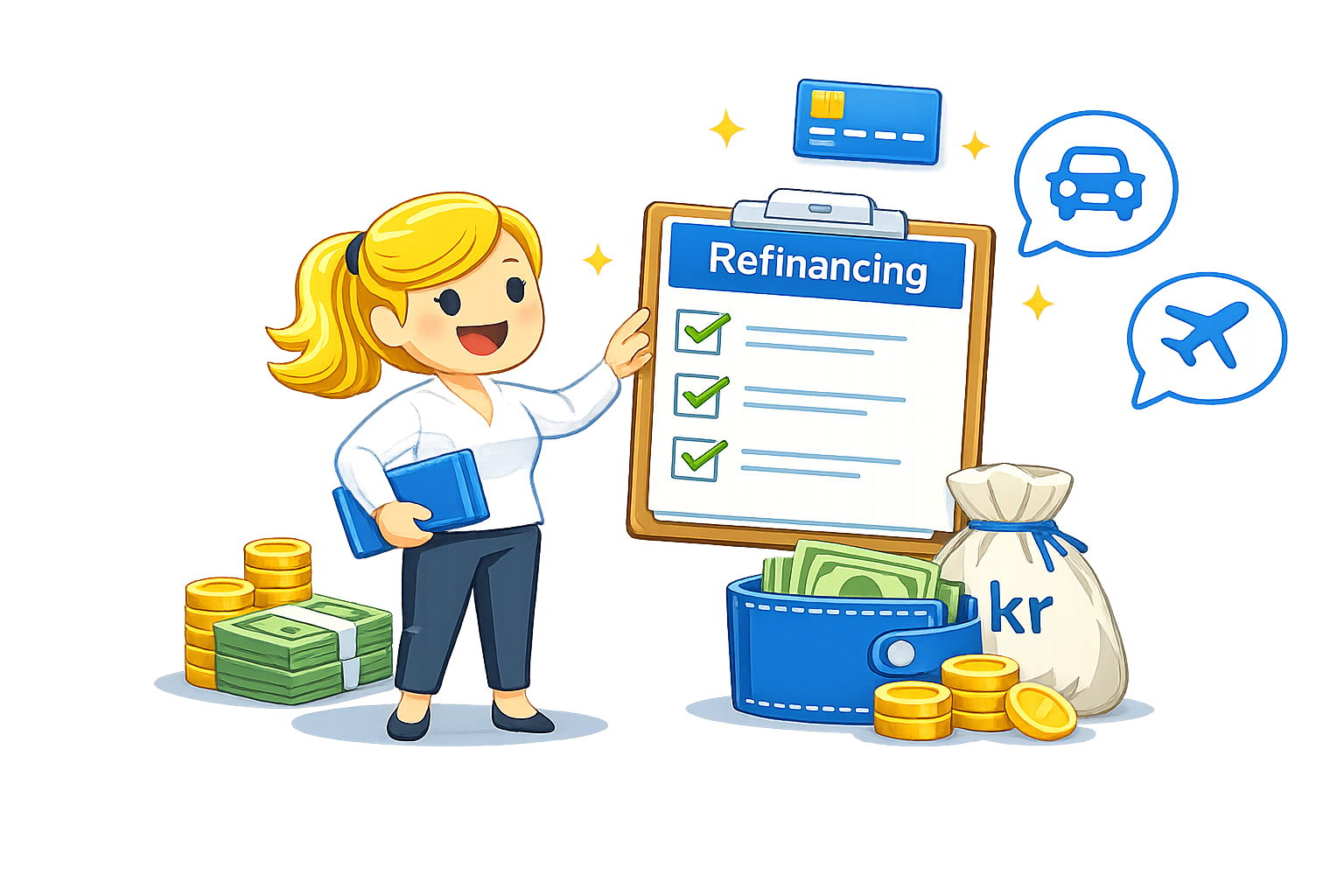
Refinancing

Benefits of Refinancing

  • You May Qualify for a Lower Interest Rate
  • Lower Monthly Payments with a Longer Repayment Term
  • Only One Monthly Payment to Keep Track Of
  • Fewer Fees and Charges
Request a Free Loan Quote Today
Loan Amount
{{ computedAmount }}
{{ currency(minAmount) }}
{{ currency(maxAmount) }}
yr(s)
Estimated monthly payment {{ currency(computeRate(form.loan_amount, form.tenure, midRate, 'monthly')) }}
Looking to Refinance Expensive Debt and Save Money?
Yes
No
{{ errors.refinance_amount[0] }} Angi hvor mye du vil refinansiere. Dette må være mindre enn det totale lånebeløpet.
{{ errors.first_name[0] }} Please fill in this required field.
{{ errors.last_name[0] }} Please complete this required field.
{{ errors.mobile_number[0] }} Mobilnummer må fylles ut, 8 siffer The mobile phone number is invalid.
{{ errors.email[0] }} Please enter your email address, for example: [email protected]. The address cannot contain the characters æ, ø, or å.
{{ errors.accepts_terms[0] }} To apply for a loan through Loan.no, you must accept our Privacy Policy.
{{ item }}
Example: If you borrow NOK 160,000 over 5 years, the total cost will be NOK 60,688 if the annual percentage rate (APR) is 14.44%. The total amount repaid will be NOK 220,688. The nominal interest rate ranges from 6% to 23%.

How We Work for You

Loan.no sends your loan application to more than 20 different banks, completely free of charge.
This allows the banks to compete to offer you the best possible loan. Requesting offers is entirely non-binding, and you'll usually receive a response within a short time.

You only need to submit one application

First, complete the application form quickly and easily

Your application is sent to the banks

Using the service is completely free and secure

Receive the best offer

Get responses from the banks within a short time
What Is Refinancing?

Refinancing means replacing existing debt with a new loan. The goal is often to consolidate multiple loans, credit cards, and lines of credit into a single agreement to gain better control of your finances. By consolidating your debt, you can reduce the number of bills, create a more predictable repayment plan, and in some cases secure more favorable loan terms.

Many people choose refinancing when they have multiple small loans, credit cards, or consumer loans with different interest rates and fees. Instead of making payments to several lenders each month, you can combine everything into one loan, making your finances easier to manage.

TopicInformation
What is it?Consolidating existing debt into one new loan
PurposeBetter financial overview and debt management
Can be used forCredit card debt, small loans, and consumer loans
Monthly paymentsOne consolidated monthly payment
SecurityAvailable with or without collateral
CostDepends on individual credit assessment
ApplicationFree and non-binding with most providers
BenefitBetter overview and easier financial management

refinancing

In This Guide, You’ll Learn More About:

  • Why many people choose refinancing
  • Refinancing credit card debt
  • How to consolidate small loans into one loan
  • Refinancing with collateral
  • Refinancing without collateral
  • What affects the interest rate
  • How to compare refinancing offers
  • How much you can borrow for refinancing
  • How refinancing can reduce costs
  • How to apply for refinancing
  • Tips for finding the best refinancing loan

Why Do Many People Choose Refinancing?

Many people choose refinancing because it makes their finances easier to manage. If you have multiple loans, credit cards, or credit accounts with different lenders, keeping track of interest rates, fees, and payment due dates can be challenging.

By consolidating your debt into a single loan, you only have one monthly payment to manage. This provides a clearer overview and makes long-term financial planning easier.

Refinancing Credit Card Debt

Credit cards are convenient, but interest rates can become expensive if the balance is not paid within the interest-free period. Over time, credit card debt can become a significant financial burden.

By refinancing your credit card debt, you can consolidate outstanding balances into one loan. This creates a more structured repayment plan and makes it easier to keep costs under control.

Consolidate Small Loans into One Loan

Small loans can be useful for short-term financial needs, but having several at the same time can make your finances unnecessarily complicated. Each loan often comes with its own interest rate, fees, and payment schedule.

A refinancing loan allows you to combine these loans into a single agreement. This means one payment to manage and a more organized financial situation.

Refinancing with Collateral

If you own a home and have available equity, refinancing with collateral may be an option. In this case, your property is used as security for the loan.

This type of refinancing often comes with lower interest rates than unsecured loans, but the lender will need to assess the value of the property and approve the application.

Refinancing Without Collateral

Refinancing without collateral is an option for individuals who want to consolidate debt without using a home or other assets as security. This is commonly used for credit card debt, small loans, and consumer loans.

Applications are typically evaluated based on income, debt-to-income ratio, and creditworthiness.

What Affects the Interest Rate?

The interest rate on a refinancing loan is determined individually. Banks and lenders assess factors such as income, existing debt, payment history, and overall creditworthiness.

The stronger your financial profile, the greater your chances of qualifying for favorable terms and a competitive interest rate.

How to Compare Refinancing Offers

When considering refinancing, it is important to look beyond the nominal interest rate. The APR (Annual Percentage Rate) includes both interest and fees, providing a more accurate picture of the total cost of the loan.

It is also wise to compare repayment terms, monthly payments, and total repayment costs before making a decision.

How Much Can You Borrow for Refinancing?

The amount you can borrow depends on several factors. Lenders typically evaluate income, existing debt, payment history, and your overall financial situation.

Before applying, it is a good idea to calculate how much debt you want to refinance so you have a realistic understanding of your financing needs.

Can Refinancing Reduce Costs?

Refinancing can simplify your finances and reduce the number of fees you pay each month. For individuals with multiple credit cards or small loans, it can provide better control over personal finances.

The amount you may save depends on your current debt situation and the terms you are offered.

How to Apply for Refinancing

The process usually begins by gathering information about your existing loans and credit accounts. You then submit an application and receive offers from banks or lenders that evaluate your financial profile.

After comparing the offers, you can choose the solution that best fits your financial situation and goals.

Find the Best Refinancing Loan

The best refinancing loan is not necessarily the one with the lowest advertised interest rate. The most important factor is finding a loan that fits your financial situation and provides a repayment plan you are comfortable with.

By comparing multiple offers, reviewing the terms carefully, and evaluating the total cost of borrowing, you increase your chances of finding a refinancing solution that provides better financial control and long-term stability.

Frequently Asked Questions About Refinancing
What is refinancing?
Refinancing involves replacing one or more existing loans with a new loan, often to secure better terms and conditions.
Why should I refinance my loans?
Refinancing can help lower your monthly payments, improve your financial overview, and potentially reduce your interest costs.
Can I consolidate multiple loans and credit cards through refinancing?
Yes, many people use refinancing to combine personal loans, credit card balances, and other debts into a single loan.
Can I get refinancing with a bad credit history?
It may be possible, but your eligibility depends on your financial situation and the lender's requirements.
Does refinancing affect my credit score?
Refinancing generally does not negatively impact your credit score in the long term and may improve your financial situation.
How much can I save by refinancing?
The amount you can save varies depending on your interest rates, fees, and the amount of debt you refinance.
How long can the repayment period be for a refinancing loan?
Repayment terms vary between lenders and can often be tailored to your financial situation and loan amount.
Can I apply for refinancing with a co-applicant?
Yes, applying with a co-applicant can improve your chances of approval and may help you secure better loan terms.